Hot to Read· Swiss eID · 8 min read
edeXa × swiyu: anchoring Switzerland's national e-ID on a verifiable enterprise chain
How edeXa is positioning itself alongside the Swiss Confederation's swiyu wallet to give the country's new e-ID a programmable, audit-grade backbone for banks, cantons and enterprises.
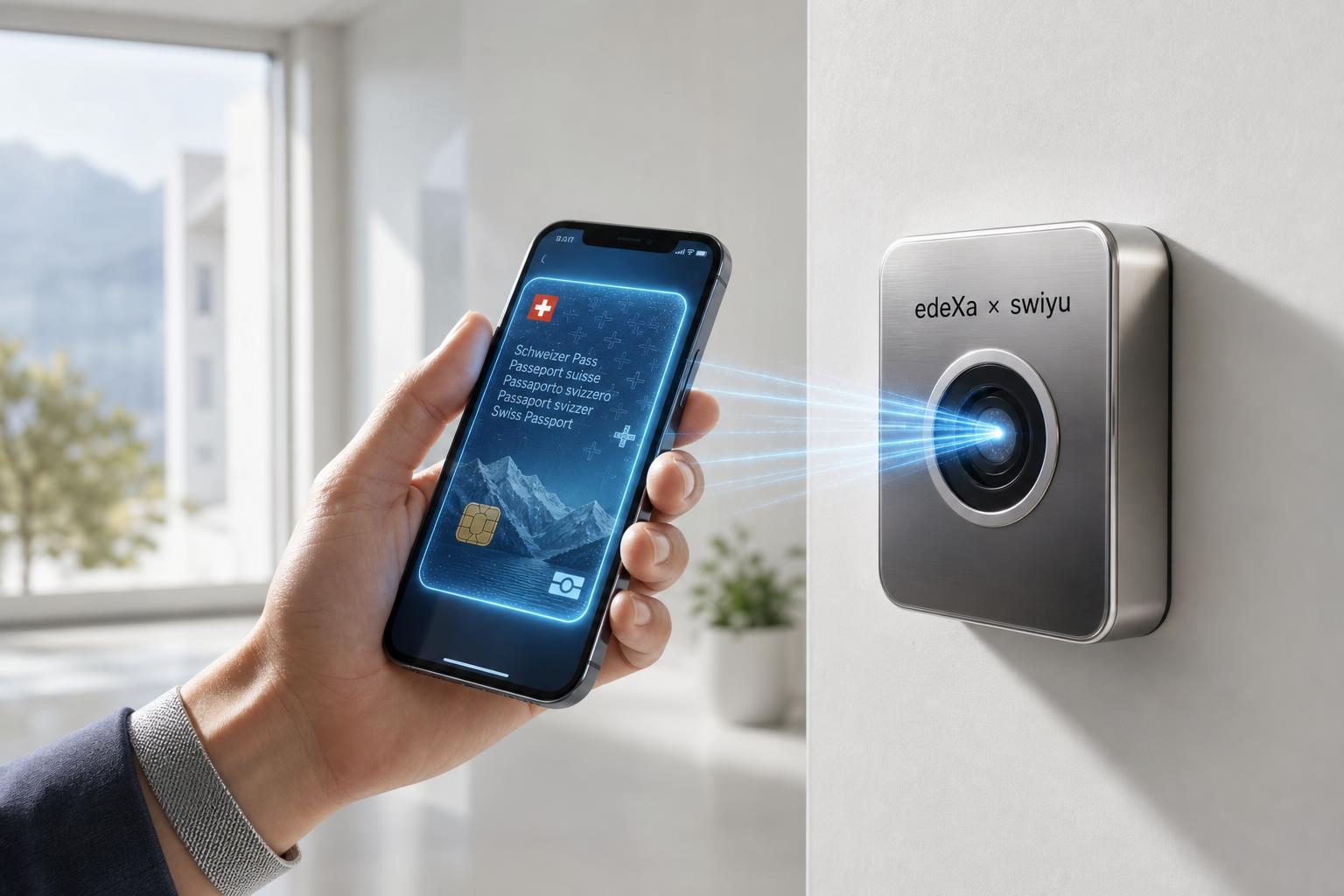
Switzerland is rolling out one of the most ambitious public e-ID programmes in Europe. The federal swiyu wallet - built around W3C Verifiable Credentials, OpenID4VC and a public trust registry on the Swiss Trust Infrastructure - gives every resident a state-issued digital identity they fully control. The architecture is deliberately open: any verifier, any issuer, any wallet that respects the standards can plug in. That openness is exactly where edeXa fits.
edeXa has been engineering enterprise-grade identity rails for years through eID, eSign and eNotary. With swiyu now live in beta and the federal Discussions repository on GitHub openly debating issuer onboarding, status lists and revocation models, edeXa is positioning its network as the natural anchoring layer for Swiss organisations that need to consume - and re-issue - swiyu credentials at scale, with provable audit trails.
Important context: the scenario described below is an illustrative example use case explored against the swiyu Public Beta - not a deployed production implementation, and not an official engagement with the Swiss Confederation. edeXa has integrated against the open swiyu Public Beta, built enterprise workflow prototypes on top of the beta infrastructure, tested blockchain-based identity verification, and is developing production-ready enterprise use cases. edeXa is not an official Swiss government contractor, not an exclusive Swiss government partner, and not an officially endorsed supplier of the Swiss Confederation.
As an illustrative example, the integration model could look like this. A bank, insurer, canton or hospital uses swiyu as the citizen-facing wallet. edeXa Connectors would verify the presented credential against the federal trust registry, then mint a derived, business-scoped attestation on the edeXa chain - for example 'KYC verified', 'over 18', 'licensed practitioner', or 'authorised signatory'. The original Swiss credential never leaves the user's phone. What would land on edeXa is a hash and a policy - exactly the kind of artefact regulators, auditors and counterparties typically need. Again, this is a conceptual example based on our beta experiments, not a live production deployment.
This solves a problem the federal team has been transparent about in its public Discussions: status lists, revocation and long-term verifiability are hard, especially across thousands of independent verifiers. edeXa's tamper-evident anchoring gives Swiss enterprises a shared, neutral substrate to record presentations and revocation events without each one running its own ledger - and without re-introducing the centralised data lakes that the e-ID law was specifically written to avoid.
Crucially, the design is GDPR- and FADP-native. Personal data stays in the swiyu wallet. Only cryptographic proofs travel to edeXa. Holders keep selective disclosure. Verifiers keep their audit trail. The Confederation keeps its sovereignty over the trust registry. edeXa simply becomes the programmable layer where Swiss identity meets Swiss business logic - payments releasing on signed mandates, contracts auto-executing on proof of authority, supply chains binding signatures to actual people.
For developers, the surface is small and familiar: an OID4VP verifier, a connector, a smart contract. For enterprises, the story is bigger - a credible path to plug into the national e-ID without betting on a single vendor, a single chain, or a single jurisdiction. swiyu gives Switzerland the wallet. edeXa gives Switzerland a place to put what the wallet proves.
The next twelve months will decide which infrastructures become load-bearing for Swiss digital identity. Between an open federal stack, a deeply Swiss-aligned enterprise chain, and a clear regulatory mandate, the alignment between swiyu and edeXa is one of the most quietly important stories in European Web3 right now.