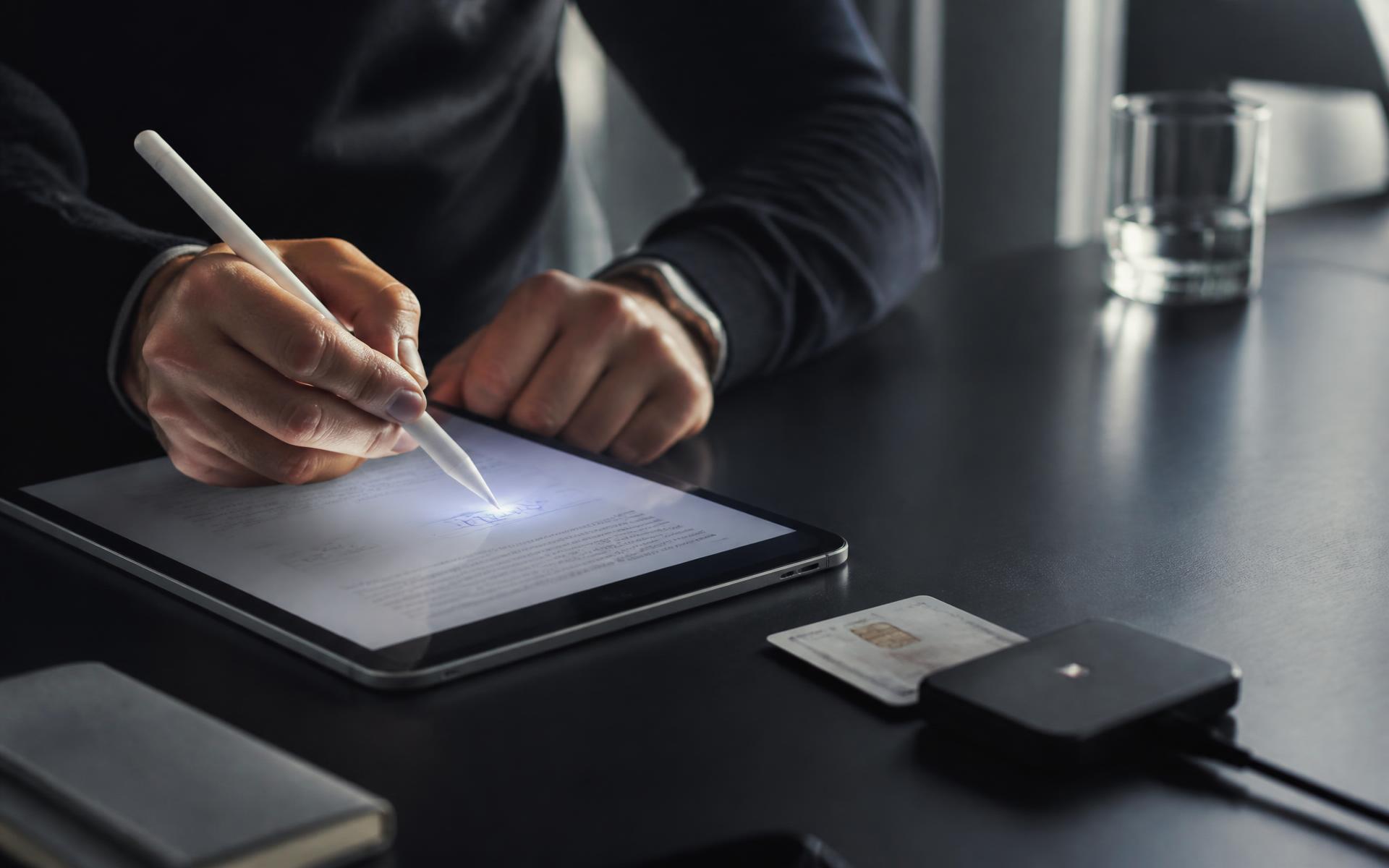
edeXa Certify - signing infrastructure
Signed today.
Provable in 2046.
Qualified electronic signature workflows with blockchain-anchored proof of content, signer, and time. eIDAS and ZertES aligned, and your documents never leave your servers.
The problem
A signature is easy.
Proving it later is not.
Signature validity fades over time
Certificates expire and revocation data ages. A signature that validates today can become unverifiable in ten years.
The proof lives with one vendor
If the platform that holds the audit trail is acquired, repriced, or shut down, your evidence goes with it.
Uploading contracts is the wrong trade
Legal, medical, and financial documents should not have to leave your jurisdiction just to be signed.
Assurance levels
Three levels. One workflow.
SES
Simple electronic signature
Click-to-sign with audit metadata. Fast, low friction, suitable for low-risk internal approvals.
AES
Advanced electronic signature
Signer identity verified and uniquely linked to the signature, with any later change to the document detectable.
QES
Qualified electronic signature
Qualified certificate from a trust service provider. Legal equivalence to a handwritten signature in the EU.
How it works
Prepare, sign, anchor, verify.
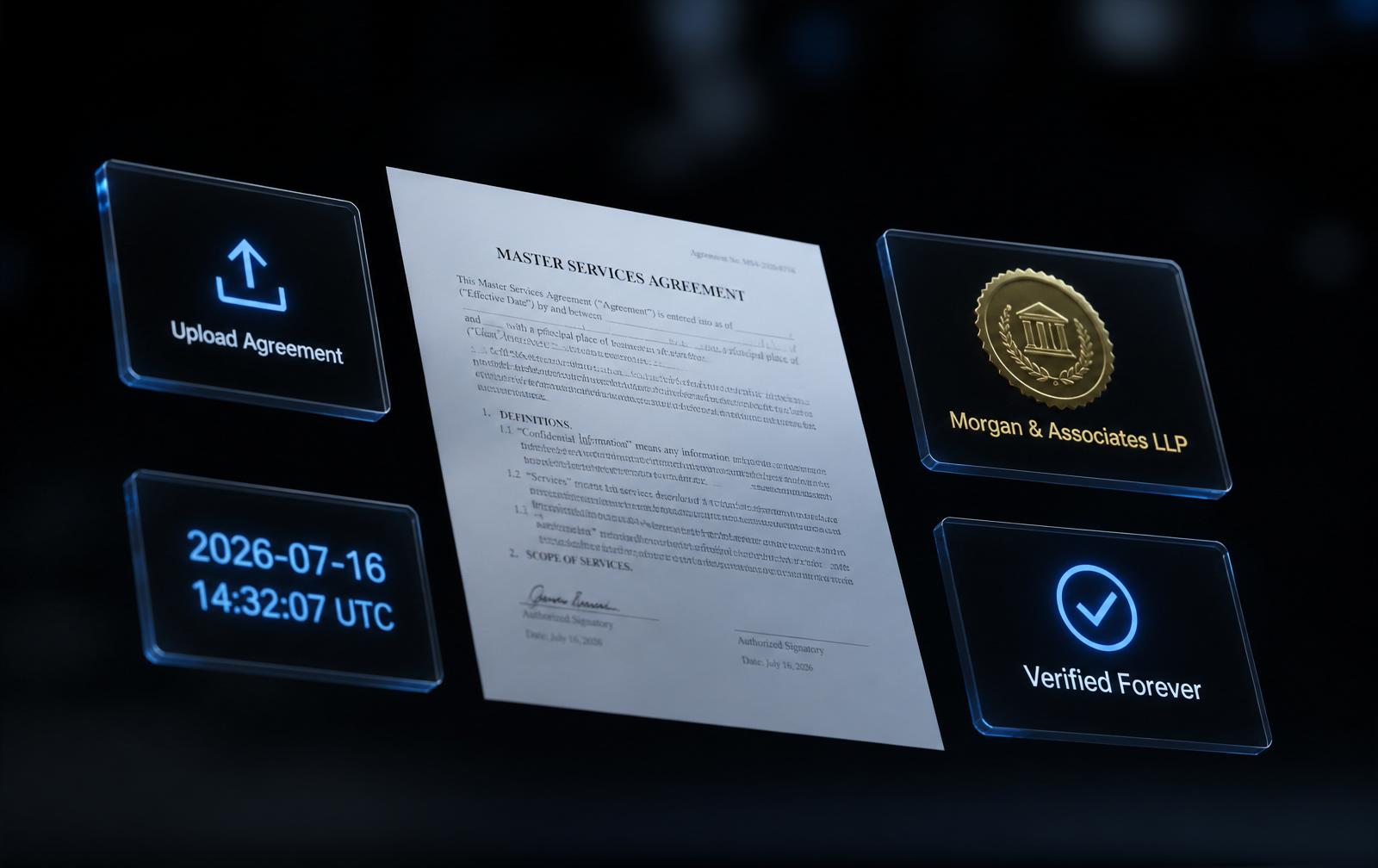
01
Prepare
The final document is hashed locally before anyone signs.
02
Sign
Each signer authenticates at the required assurance level and applies their signature.
03
Anchor
The signed file's fingerprint and block time are committed to the edeXa Layer 1 chain.
04
Verify
Anyone re-hashes the file and compares. Match proves content, signer set, and moment.
Capabilities
Legal weight now,
evidence that outlives it.
Any assurance level
Run SES, AES, and QES side by side and match the level to the risk of each document type.
eIDAS and ZertES aligned
Built for European and Swiss requirements, including qualified certificates through trust service providers.
Blockchain-anchored proof
Content, signer reference, and time are fixed on a public Layer 1 ledger the moment signing completes.
Long-term verifiability
Verification does not depend on a live certificate service, an account, or edeXa still being your vendor.
Documents never move
Hashing happens in your environment. Only fingerprints are anchored, so confidentiality is preserved by design.
Fits existing workflows
Connect your DMS, ERP, or portal through the edeXa connectors instead of migrating documents to a new system.
Where it is used
Wherever a signature has to hold up.
Contracts and commercial terms
Framework agreements, NDAs, and orders signed at the assurance level each counterparty requires.
Law firms and notaries
Client mandates and filings signed with qualified certificates and provable timestamps.
HR and employment
Employment contracts, amendments, and policy acknowledgements with a verifiable signing record.
Finance and onboarding
KYC packs, loan documentation, and board resolutions where evidential weight matters.
Questions
Straight answers.
What is a qualified electronic signature?
It is the highest assurance level under eIDAS and Switzerland's ZertES, created with a qualified certificate issued to a verified identity. In the EU it carries the same legal effect as a handwritten signature.
Is an electronic signature legally binding?
Yes. Simple, advanced, and qualified signatures are all admissible in the EU, EEA, Switzerland, and the UK. The difference is evidential weight: with a qualified signature, the burden of proof shifts to whoever disputes it.
Why add blockchain anchoring to a signature?
Certificates expire and validation services change ownership. Anchoring the document fingerprint on a public ledger preserves independent proof that this exact file existed, signed, at that moment, decades later.
Do our documents get uploaded to edeXa?
No. Documents stay in your environment. Only a one-way fingerprint and timestamp are anchored, so professional secrecy and GDPR obligations are unaffected.
How does a counterparty verify a signature?
They re-hash the file they hold and compare it against the anchored value on the public chain. No account, no login, and no cooperation from us is required.
Next step
Sign your first 10 documents free.
A 15-minute walkthrough covers assurance levels, qualified certificate options, and what verification looks like to a counterparty or a court.
Engineered by edeXa AG, Vaduz, Liechtenstein.